The rule card
One page. Print it, pin it where the on-call phone lives.
Download the PDFLetter size, prints legibly in black and white.
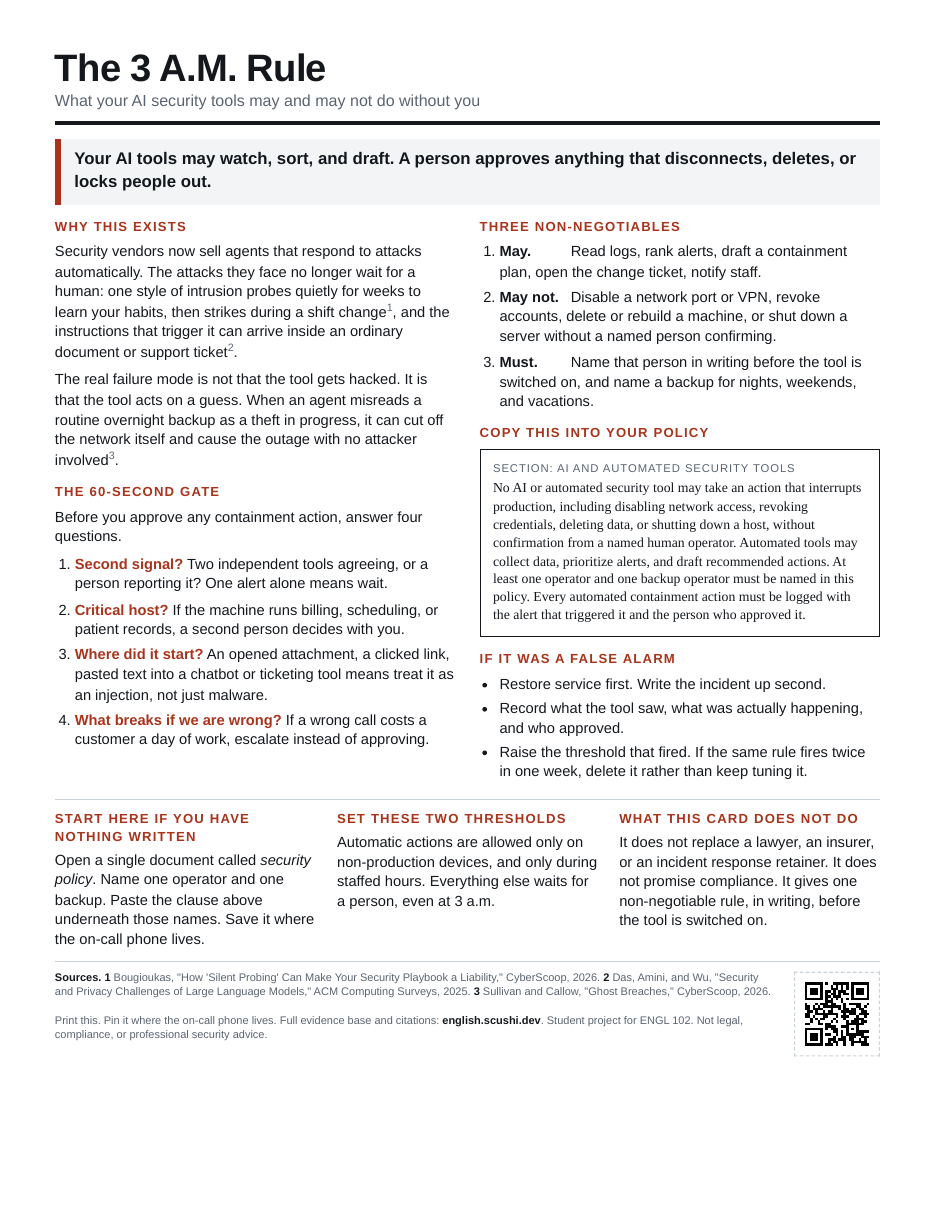
What is on it
1. The rule, in one line
Your AI tools may watch, sort, and draft. A person approves anything that disconnects, deletes, or locks people out.
2. Three non-negotiables
- May
- Read logs, rank alerts, draft a containment plan, open the change ticket, notify staff.
- May not
- Disable a network port or VPN, revoke accounts, delete or rebuild a machine, or shut down a server without a named person confirming.
- Must
- Name that person in writing before the tool is switched on, and name a backup for nights, weekends, and vacations.
3. The four-question gate
Before approving any containment action, answer these. Any single "no" means wait or escalate.
- Second signal? Two independent tools agreeing, or a person reporting it. One alert alone means wait.
- Critical host? If the machine runs billing, scheduling, or patient records, a second person decides with you.
- Where did it start? An opened attachment, a clicked link, or pasted text into a chatbot or ticketing tool means treat it as an injection, not just malware.
- What breaks if we are wrong? If a wrong call costs a customer a day of work, escalate instead of approving.
4. The clause to paste into your policy
No AI or automated security tool may take an action that interrupts production, including disabling network access, revoking credentials, deleting data, or shutting down a host, without confirmation from a named human operator. Automated tools may collect data, prioritize alerts, and draft recommended actions. At least one operator and one backup operator must be named in this policy. Every automated containment action must be logged with the alert that triggered it and the person who approved it.
This is the part that turns reading into adoption. If the rest of the card is an argument, this block is the deliverable.
5. If it was a false alarm
- Restore service first. Write the incident up second.
- Record what the tool saw, what was actually happening, and who approved.
- Raise the threshold that fired. If the same rule fires twice in one week, delete it rather than keep tuning it.
Why a card instead of a policy template
A policy template assumes someone has time to read a policy. The audience here does not. A single page can be printed, taped inside a server closet, or pinned next to the on-call phone, and it can be pointed at during an argument at 3 a.m. The wording is permissions rather than advice, because a permission can be enforced where a recommendation invites negotiation.
Download the PDF